
Building autonomous vehicles is no longer just a matter of sensors and software. It has become a test of how well companies can manage massive amounts of data, run large-scale simulations and verify safety in millions of scenarios before a vehicle even hits the road. For automotive companies working on self-driving systems, the ability to test and retrain scale models is now as important as the vehicles themselves.
This shift helps explain why cloud infrastructure has become central to the development of autonomous driving. Training and validation of self-driving systems requires low-latency computing, high-performance data processing, and the ability to run repeated tests under changing conditions. On-premise systems often struggle to keep up with this demand, especially when development timelines stretch over several years.
One company taking this approach is Aumovio, which uses cloud computing and AI tools to support its autonomous vehicle work. The company has chosen Amazon Web Services as its preferred cloud provider, relying on its infrastructure to support AI-driven simulation, testing and development workflows.
Aumovio plans to integrate agentive and generative AI into its development processes to accelerate how manufacturers build and test autonomous systems. These tools are intended to support tasks such as simulation design, software testing, and data analysis, areas where development cycles can slow as systems become more complex.
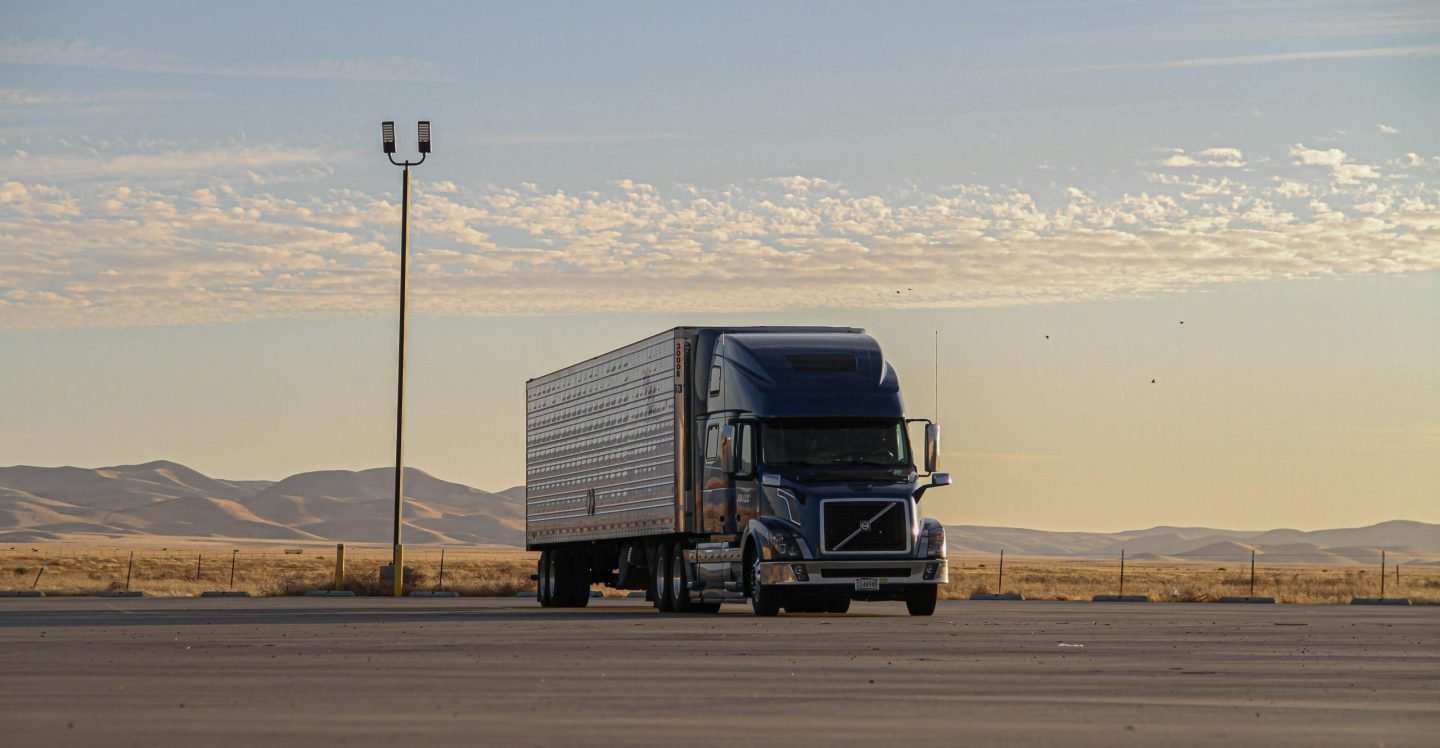
The cloud setup will be used in a customer project related to autonomous trucking. Aumovio’s Aurora autonomous trucks are expected to enter production in 2027. The system includes a backup computer designed to take over in the event of a primary system failure, reflecting an emphasis on redundancy in safety-critical systems. As part of the validation process, the Aurora driver met more than 10,000 requirements and passed 4.5 million tests running on AWS infrastructure.
“Our collaboration with AWS is a cornerstone of our strategy to lead the transformation to autonomous mobility,” said Ismail Dagli, Executive Board Member and Head of the Autonomous Mobility Business Area at Aumovio.
“We are creating a solution that combines cloud infrastructure, artificial intelligence capabilities and automotive industry expertise to effectively transform data into actionable insights across complex information environments. This collaboration is not only about accelerating development for our customers, but also about driving safety, efficiency and innovation in autonomous driving.”
From a business perspective, numbers matter less as marketing evidence and more as signals of scale. Carrying out millions of tests is no longer unusual in autonomous driving. What matters is how quickly teams can iterate on these tests, change inputs, and evaluate results without having to rebuild the infrastructure each time. Cloud platforms facilitate this kind of iteration, although costs and long-term dependency remain.
This trend goes beyond a single company or project. Self-driving systems share similarities with large-scale artificial intelligence models used in other fields, where performance improves with more training data and more computing resources. By mid-2025, Waymo researchers said the laws of autonomous vehicle scaling resemble those seen in large language models, where added data and computations lead to measurable gains.
This logic has driven more automotive firms to large cloud providers that operate global fleets of GPUs and offer flexible capacity. In 2023, BMW said it would move its autonomous vehicle data to AWS, citing the need to handle growing volumes of sensor data and simulation workloads.
For businesses outside the automotive industry, the lesson is less about self-driving vehicles and more about how AI is changing. Security validation, redundancy, and repeatable testing are becoming standard expectations in AI systems operating in real-world conditions. Cloud infrastructure may not solve every problem, but it has become a practical way to manage scaling without locking teams into fixed hardware decisions too early.
“At AWS, we believe the future of autonomous mobility is not just about technology – it’s about enabling our partners to deliver on the promise of safer and more efficient transportation at scale,” said Ozgur Tohumcu, general manager of Automotive and Manufacturing at AWS. “Our collaboration with Aumovio and Aurora exemplifies this vision by combining AI and AWS cloud infrastructure with Aumovio’s automotive expertise to help Aurora scale autonomous freight while maintaining strict safety standards.”
Aumovio itself is a relatively new standalone company. In September 2025, it was spun off from the Continental group and is based in Frankfurt, Germany. The use of cloud-based AI development reflects a wider industry reality: building autonomous systems now depends as much on how data and calculations are managed as it does on advances in vehicle hardware.
(Photo: Sander Yigin)
See also: Data center construction: implications for corporate strategy in 2026

Want to learn more about Cloud Computing from industry leaders? Check out the Cyber Security & Cloud Expo in Amsterdam, California and London. The comprehensive event is part of TechEx and is co-located with other leading technology events, click here for more information.
CloudTech News is powered by TechForge Media. Explore other upcoming business technology events and webinars here.