
Businesses rely on seamless operations to maintain productivity, customer trust and revenue growth to monetize their business. While disaster recovery (DR) is a well-known practice, proactive disaster prevention planning is fast becoming a must-have service. For VMware cloud service providers (VCSPs), offering disaster prevention solutions presents a major opportunity to help organizations maintain uptime and resilience in an increasingly unpredictable and complex IT environment.
What is disaster recovery?
Disaster Recovery (DR) is the process of restoring IT systems, data and operations after a disruptive event such as a cyber attack, natural disaster or hardware failure. It includes a combination of strategies, technologies and policies to ensure business continuity and minimize downtime.
Typical DR solutions often include data backups, DR site failover mechanisms, and cloud-based recovery capabilities to rapidly restore critical services. Businesses implement disaster recovery plans to prepare for potential disruptions and maintain operational resilience.
In this blog, we’ll explore the importance of disaster recovery, strategies for preventing potential disruptions, and how VCSP partners can leverage DRaaS Go-To-Market to expand their service offerings. With this suite, providers can improve their disaster recovery capabilities and deliver greater value to their customers.
Why is it important to avoid disasters?
Traditional disaster recovery strategies focus on restoring systems after an incident occurs, which means you will experience downtime of production systems and possibly lose critical and production business data. However, with the rise of cyber threats, human error, hardware failure and natural disasters, preventing outages before they happen is critical to business continuity. Disaster prevention planning uses proactive strategies, real-time replication, and failover mechanisms to minimize or completely eliminate disruption.
What services does VMware Cloud Foundation offer for disaster recovery?
VMware Live Recovery (VLR) enhances the robust capabilities of VMware Cloud Foundation by providing end-to-end data resiliency and seamless web protection. It helps ensure business continuity by minimizing downtime, enabling rapid recovery from unexpected failures, and providing effective failover mechanisms.
With advanced automation and integration across VCF environments, organizations can achieve high availability, simplified disaster recovery operations, and simplified management of protected workloads.
…VMware Live Recovery enables businesses to maintain operational continuity, minimize data loss, and maintain continuous service availability during infrastructure disruptions.
Some risks of unplanned downtime
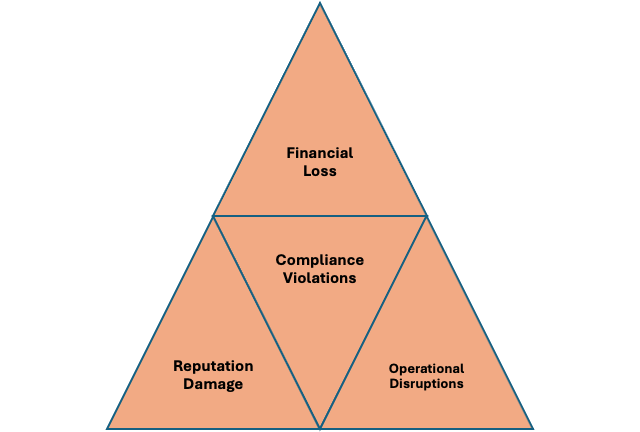
- Financial loss: Unplanned downtime can cost businesses thousands to millions of dollars per hour.
- Damage to reputation: Customers always expect service. Downtime can destroy trust and push them towards competition.
- Violation of compliance – Compliance Risks: Many businesses must adhere to strict regulatory standards to ensure data availability and security. Downtime can lead to heavy fines and legal consequences. In addition, service providers must demonstrate compliance with industry regulations based on the industries in which they operate. For example, the Digital Operational Resilience Act (DORA) strengthens digital resilience in the financial sector and requires robust operational and security measures.
- Operational failures: Critical workflows and business processes suffer, resulting in lost productivity and missed deadlines.
Key components of disaster prevention planning
There are many factors to consider when building a disaster prevention strategy. This diagram illustrates some of the most important things to consider.
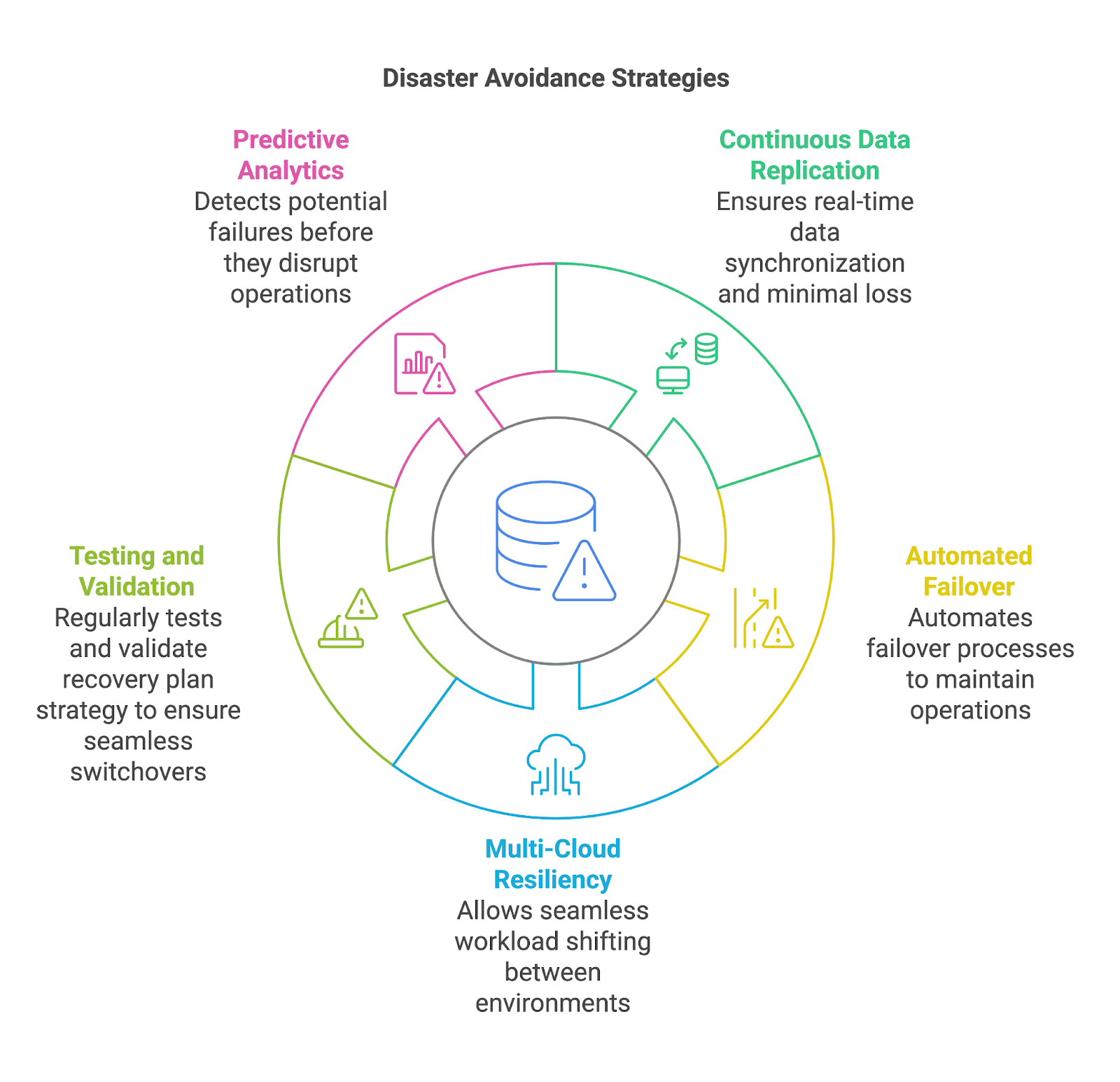
- Leverage VMware’s advanced replication technologies to ensure real-time data synchronization between primary and secondary sites. This guarantees minimal data loss and near-instant failover capabilities.
- Leverage VMware Live Recovery (VLR) to automate failover processes in the event of an outage. This ensures business operations continue with minimal disruption.
- Improve business continuity by integrating failover solutions that allow workloads to seamlessly move between on-premises and service provider cloud environments when needed.
- Regularly test disaster prevention strategies through non-intrusive simulations using VLR. Verify that systems can switch seamlessly without affecting live environments.
- Leverage AI-driven analytics and monitoring tools with VCF Operations to detect potential failures before they cause disruption. Proactive alerts enable IT teams to mitigate risks before they escalate.
VCSP Advantage: Providing business resilience
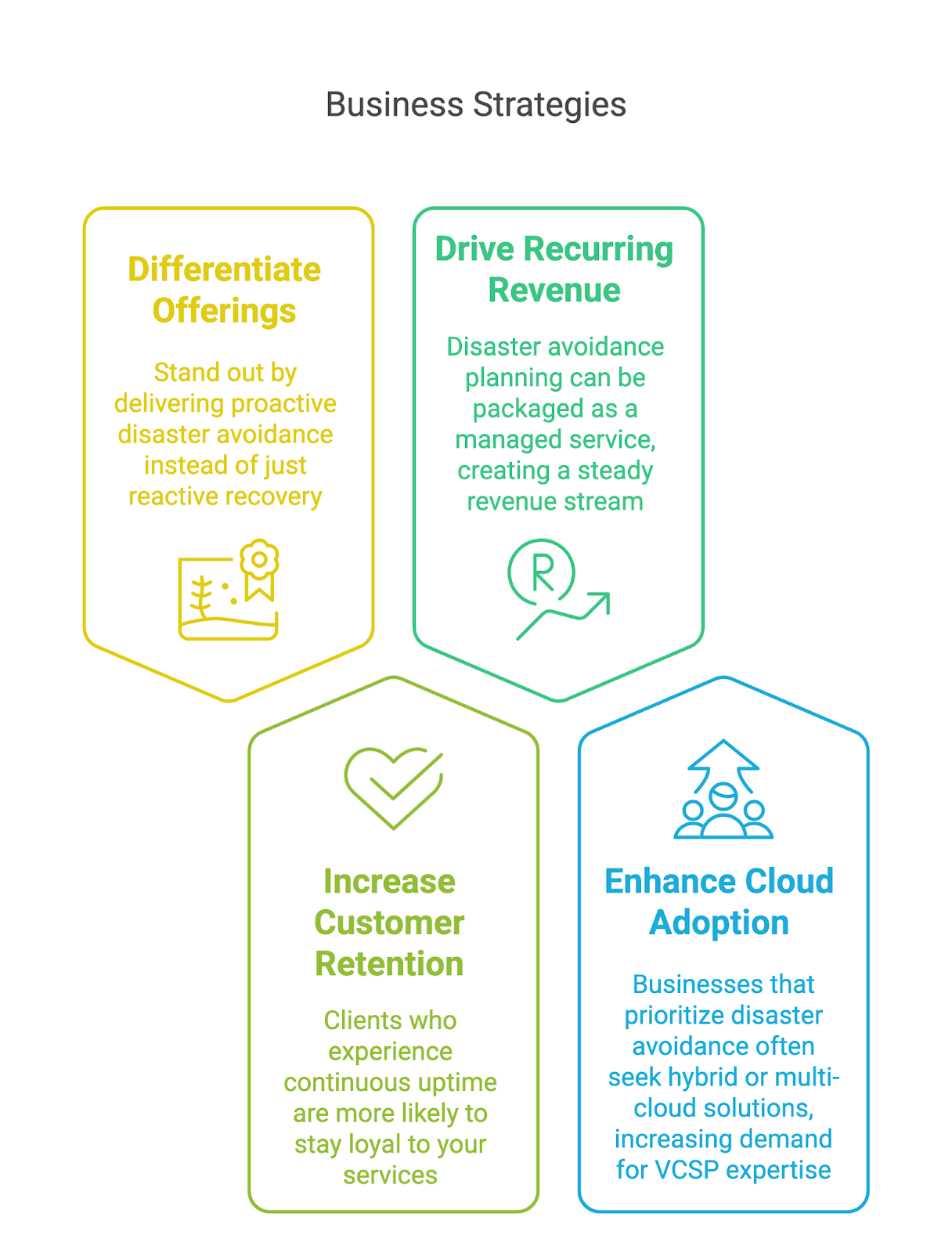
For cloud services provider VMware, offering disaster prevention planning isn’t just a value-add, it’s a revenue-generating differentiator. Businesses are actively looking for service providers that can provide near-zero downtime and peace of mind. By integrating Disaster Recovery as a Service, VCSPs can monetize high availability solutions through tiered recovery plans, premium SLAs and managed failover services. This not only improves customer retention, but also creates recurring revenue streams and positions VCSPs as trusted business continuity partners.
How VCSPs can maximize opportunities:
Conclusion
Disaster prevention planning should no longer be an option, it must be a necessity. Enterprises can no longer afford to rely solely on reactive disaster recovery. VMware cloud service providers offer proactive disaster prevention services and help organizations achieve true IT resilience, ensuring trouble-free operations even in the event of potential outages.
Access the Go-To-Market Kit:
Broadcom Advantage Pinnacle and Premier Partners are encouraged to use the resources Broadcom provides to them to brand and enhance their services to gain a competitive advantage. The GTM suite is only available to Pinnacle and Premier partners, find out what’s in the suite guide here. As a Pinnacle or Premier Partner in the Broadcom Advantage Partner Program, you can request access to our VCF Disaster Recovery suite as a Go-To-Market service suite to differentiate and monetize your solution.
Ready to take your cloud offerings to the next level? Use the DRaaS GTM Kit to start showcasing your DR services to your existing customers as well as recruiting new customers.
To share this blog with your peers, use this link: https://bit.ly/DRaas-GTMKit-Blog.