
As the private cloud landscape evolves, VMware Cloud Service Providers (VCSPs) continue to look for ways to simplify operations, scale with efficiency, and deliver differentiated services to their tenants. With the release of VMware Cloud Foundation (VCF) 9.0, it’s a great time for VCSPs to explore the benefits that VMware vSAN can offer your business.
With VCF 9.0, we’re doubling down on powerful new vSAN-based features that help VCSP providers modernize their infrastructure, streamline operations, and meet the dynamic demands of modern applications. As you know, the VCF license includes 1 TiB of vSAN per core, a benefit that many VCSP providers can use more strategically to reduce private cloud deployment costs.
In this blog, we’ll walk through what’s new in vSAN with VCF 9.0 and how VCSPs can leverage these features to create more resilient, scalable, service-rich storage-as-a-service and private cloud offerings to better serve their customers.
Deploying existing vSAN environments to VCF
With VCF 9.0, we’re expanding support beyond greenfield deployments. For VCSPs already running vSphere environments using vSAN HCI, vSAN Stretched Clusters, or vSAN 2-Node configurations, it is now possible to import into VCF. This allows you to migrate your existing “islands” of private cloud environments to the centralized lifecycle, security and operational management benefits of VCF without starting from scratch.
This is a huge win for partners looking to unify their private cloud operations under a single platform while preserving their infrastructure investment.
VSAN Stretched Clusters just got better
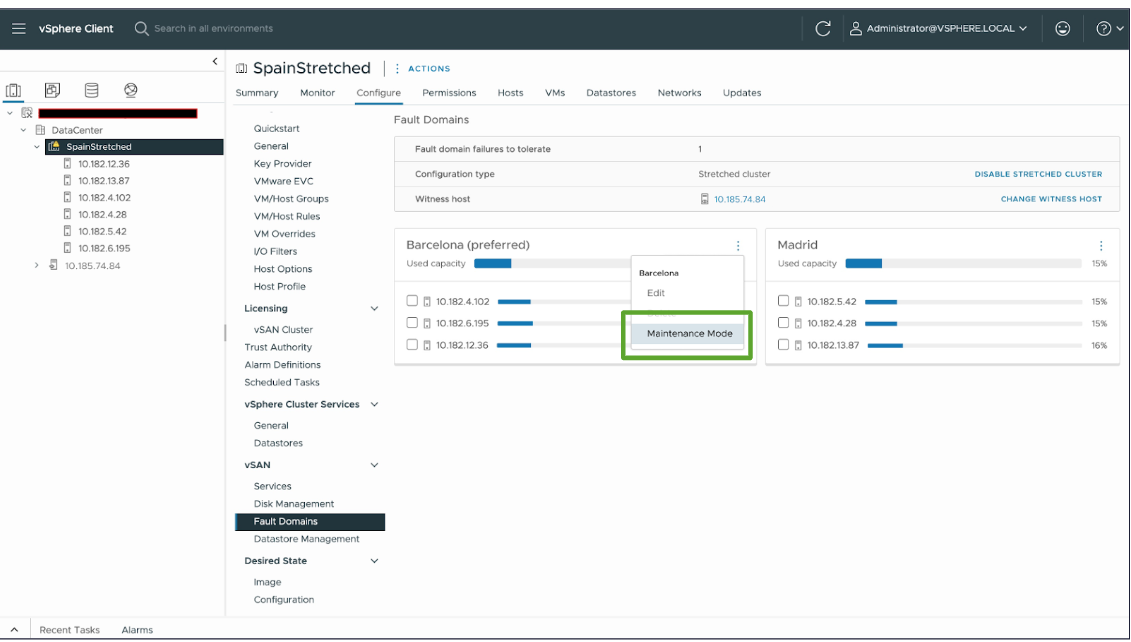
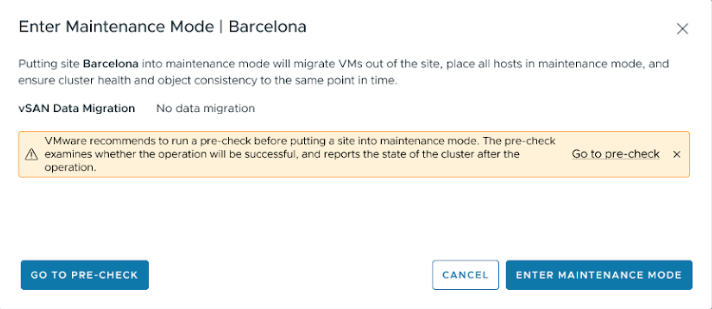
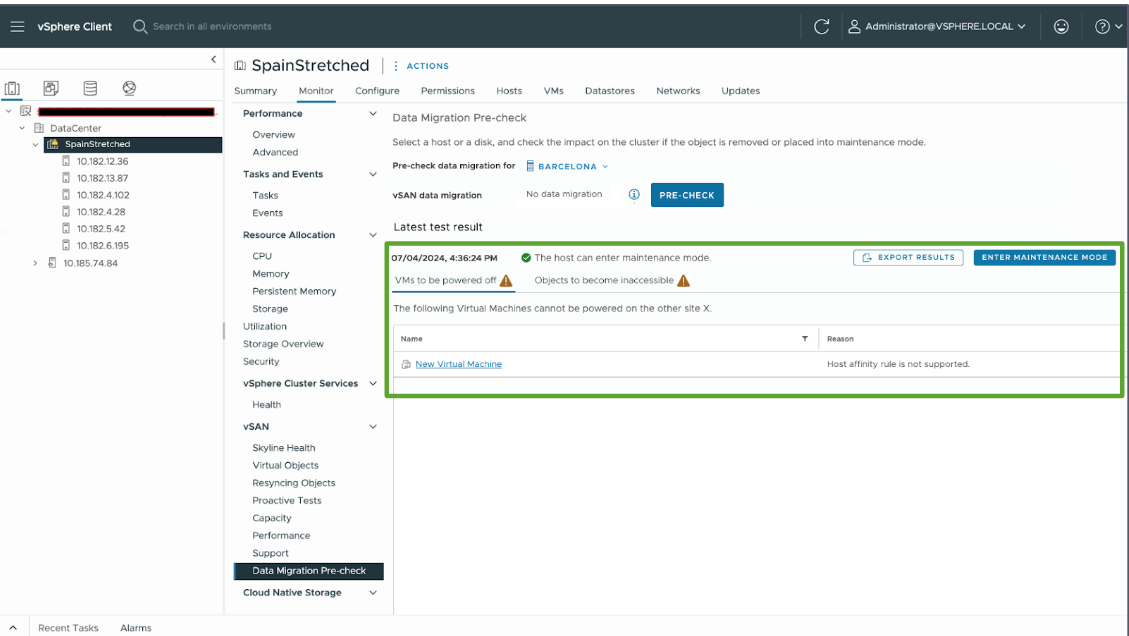
Stretched clusters continue to be a common solution for VCSP serving tenants with zero data loss (RPO=0) requirements. As a service provider, your maintenance windows are critical. While customers understand that maintenance is important, they still expect their systems to remain operational without interruption. With VCF 9.0, we simplify one of the most time-consuming operations, system maintenance. Previously, maintenance meant putting hosts into maintenance mode one at a time. Now the entire site can be put into maintenance mode at once, significantly speeding up operations, reducing administrator overhead and improving the effectiveness of scheduled maintenance windows.
What’s more, vSAN stretched storage clusters can now be paired with stretched compute clusters, a major improvement for providing high availability across all infrastructure layers. This combination provides improved uptime and data resiliency for your dedicated customer workloads and multi-tenant workloads.
vSAN Operations at Scale
Managing diverse cloud footprints is a common challenge for VSP providers, especially those operating a mix of dedicated and private multi-tenant clouds. With VCF 9.0, multiple cloud instances can now be federated into VCF Operations, giving providers a single-pane view to monitor, manage, and lifecycle vSAN clusters across environments.
And there’s more, VCF Operations now includes a powerful new feature: the vSAN Performance Diagnostics tool. This tool can:
- Run benchmarks to optimize IOPS, latency and throughput
- Analyze historical performance data
- Identify bottlenecks and provide recommendations
- Create performance graphs for advanced troubleshooting
This gives VCSP deep insight into storage performance trends and helps ensure service levels are met.
Scaling for modern applications: File services for Kubernetes
As Kubernetes adoption accelerates, so do the requirements for underlying storage. vSAN is no longer just about block storage. With vSAN File Services in VCF 9.0, the file share limit per cluster has increased from 250 to 500, supporting the growing needs of SMB and NFS file shares in containerized environments.
This enhancement gives VCSP more flexibility to support Kubernetes-based workloads with high-density, multi-tenant file services.
Multi-tenant storage as a service, refined
Let’s talk about what is most important to many VCSPs, multi-tenancy.
VCF 9.0 introduces new innovations in VCF automation that bring familiar features from VMware Cloud Director (VCD) to native VCF environments. VCSPs can now offer:
- Volume Services for individual clients in a shared vSAN cluster
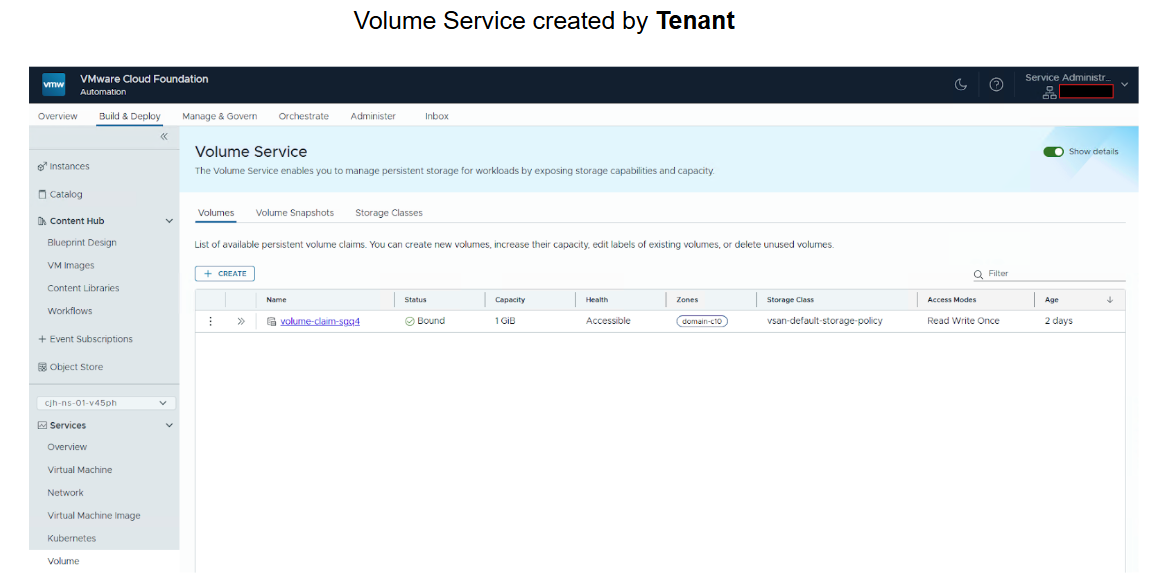
- Support for persistent volumes for Kubernetes tasks (ReadWriteOnce and ReadWriteMany)
- Control granular storage policies based on tenant subscription level
- Per-client quota enforcement with flexibility to cover multiple or dedicated clusters
- Self-service storage consumption for tenant administrators with provider-defined guardrails
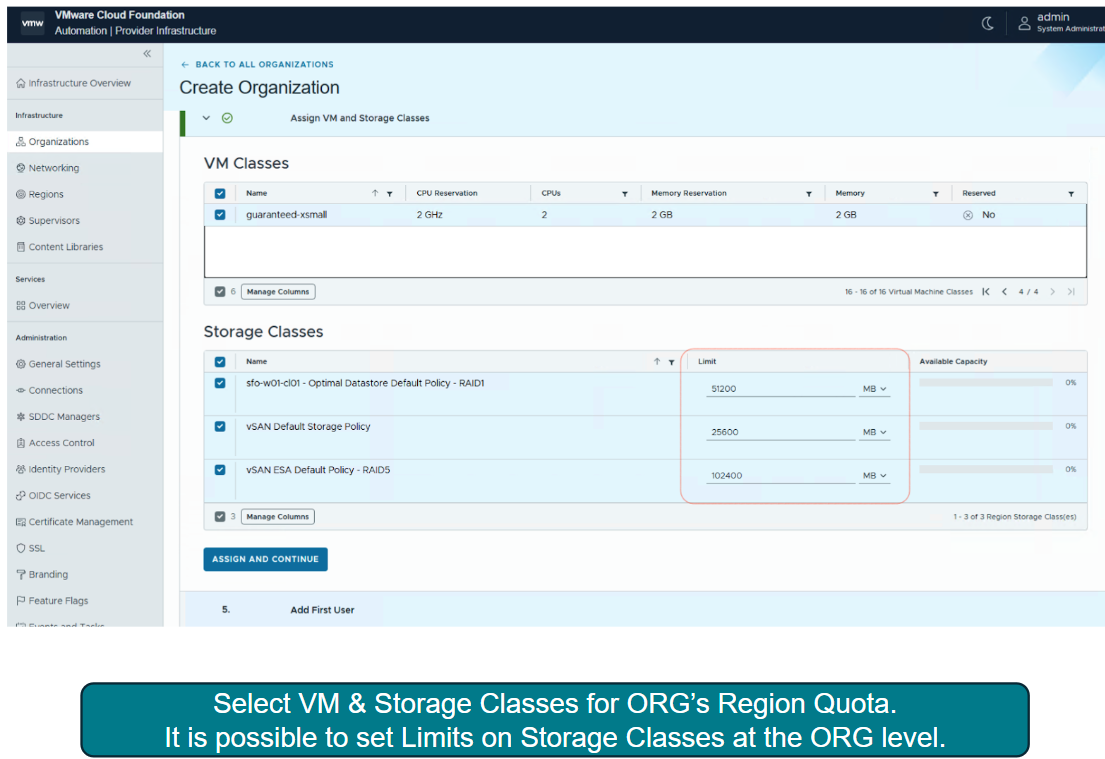
This enables a robust “Storage as a service” model that is scalable, secure and customized for each tenant.
Advanced disaster recovery with vSAN
Many partners offer highly robust Managed Disaster Recovery capabilities, backed by extensive hands-on experience in performing DR testing multiple times per month. This brings a level of operational sophistication that complements and enhances customer resilience strategies.
A solid private cloud solution is not complete without robust DR features.
In VCF 5.2, we introduced vSAN data protection for local snapshots. Now with VCF 9.0, we’re going one step further by enabling on-prem replication of disaster recovery snapshots from one VCSP data center to another, integrated with VMware Live Site Recovery (VLSR). VCSPs can now:
- Replicate snapshots for off-site protection
- Import vSAN protection groups into VLSR
- Orchestrate DR plans with RPO in as little as 1 minute

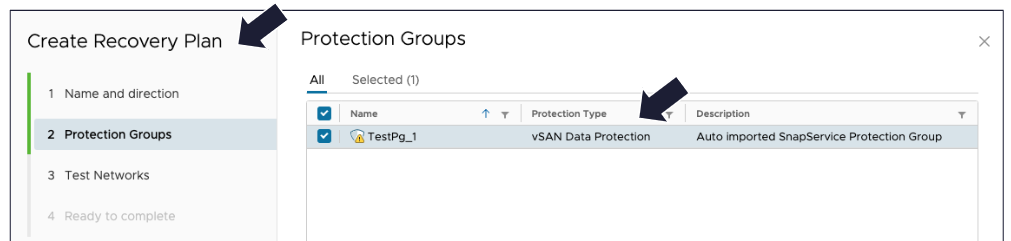
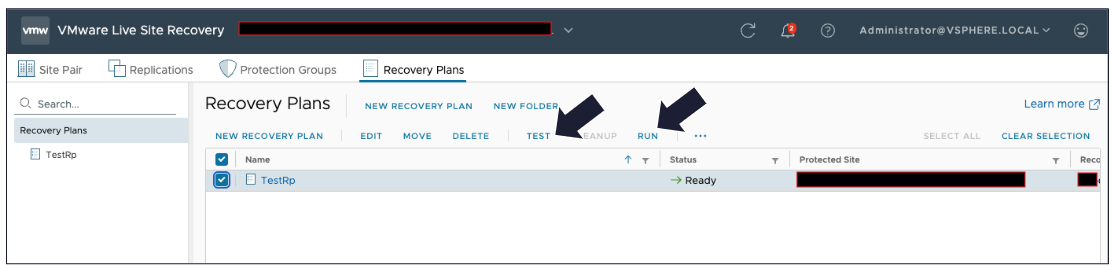
This enables VCSP to offer premium DR services with minimal data loss and fast recovery times.
For a deeper understanding of this benefit, watch the YouTube video Using vSAN Snapshots to Extend Protection Options.
TCO reduction
As you know the VCF license includes 1 TiB of vSAN per core, many VCSPs who have been relying on Fiber Channel or NFS storage are discovering how vSAN can help them save money. VCF enables partners to build cloud services that are easier to manage, with built-in compute, networking and storage tools in one place.
Many partners have found that vSAN is easy to manage because it uses existing storage on existing servers or can easily be expanded with additional internal drives. Plus, with the flexibility of vSAN, you can start small and grow over time using affordable off-the-shelf hardware. This helps reduce the total cost of ownership (TCO) of storage and can lead to better profit margins. To learn more, read the blog Unlocking TCO Advantage with vSan in VMware Cloud Foundation 9.0.
Get hands-on experience with VCF 9.0 and vSAN
As you can see, vSAN in VCF 9.0 brings significant innovations in lifecycle management, performance, resiliency, DR and multi-tenant operations. Whether you’re upgrading your current private cloud or building new services for Kubernetes and DR, there’s never been a better time to give it a try.
So, if you haven’t already, use these NFR licenses to build VCF 9.0 with vSAN in your lab. It’s the best way to explore all the new possibilities and start shaping your next big customer win.
Are you ready to build a new generation of private cloud? Let it be the basis of vSAN in VCF 9.0.
Special thanks to Steve Lord for co-authoring this blog with me and contributing his deep expertise.